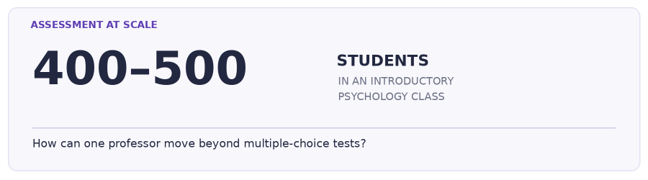
In a psychology class of 400 to 500 students, even a short written response can become a major grading challenge. Multiple-choice exams are efficient—but can they reveal everything students understand?
For Dr. Alexis Thompson, Clinical Assistant Professor of Psychology at the University at Buffalo, that question prompted a shift in how she assesses students. She began using Kritik360 to give large classes opportunities to explain ideas, consider different perspectives, and learn from the feedback of their peers.
What began as an alternative to conventional testing gradually became a broader approach to deeper learning. As generative AI introduced new questions about student work, Thompson began preparing to bring VisibleAI into that approach as well.
The Challenge: Meaningful Assessment for 500 Students
Thompson did not set out to redesign assessment around a new technology. She wanted to understand what her introductory psychology students had actually learned. Students entered with different academic backgrounds and test-taking strengths, and she worried that multiple-choice questions were not always capturing their understanding.
“I wanted a way to make sure that I was actually collecting information on what they learned.”
Kritik360 made it possible to assign more open-ended work without asking her and her teaching assistants to individually grade hundreds of essays on every activity. Students create responses, evaluate classmates’ submissions, and reflect on the quality of the feedback they receive. Thompson can then review patterns across the class and provide broader guidance.
When pandemic-era students told her they missed talking and studying with classmates, the purpose expanded. Peer assessment became a way to reconnect learners—even when they could not easily work together in person. Thompson observed longer peer evaluations during that period, a concrete sign that students were engaging in the exchange, though not a formal measure of learning gains.
Designing a Repeatable Assessment Cycle at Scale
In Psychology 101, Thompson typically schedules three approximately two-week Kritik activities around upcoming exams. Students receive a complex question or debatable concept, spend about a week developing their response, and then complete the Create, Evaluate, and Feedback stages over the following days.
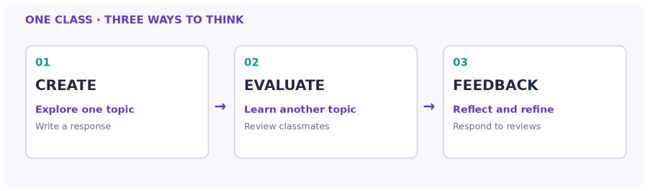
Her multi-topic approach is especially distinctive: students may create a response on one course topic and evaluate work addressing another. This gives them two opportunities to learn. By articulating one idea themselves and by evaluating how someone else has explained a different one.
A calibration activity at the start of the term helps students practise evaluation before completing the full assessment cycle. Thompson uses detailed written instructions, syllabus reminders, teaching-assistant support, and brief in-class check-ins to manage the process across hundreds of participants.
The system does not eliminate every logistical challenge. She reports that only about 10 to 20 students in classes of 400 to 500 typically require her intervention over grading disputes. Late submissions, meanwhile, remain a recurring teaching challenge. Her approach works because expectations, deadlines, and opportunities for instructor oversight are explicit andnot because the class runs without supervision.

Why She Puts More Weight on Evaluating Than Creating
One of Thompson’s most revealing decisions is to award more credit for thoughtful peer evaluation than for the original submission. She believes students learn substantially when they compare answers, recognize differences in reasoning, and explain judgments to one another.
“I think this is where they’re learning the most is during the evaluation phase.”
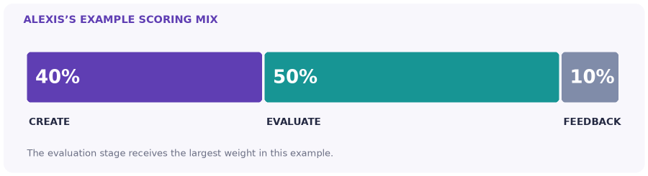
She has also modified rubric templates to encourage students to differentiate between stronger and weaker submissions rather than awarding everybody full marks. When students read all the work before ranking or scoring it, she has heard that this comparison helps them notice differences and develop more considered written evaluations.
Not every evaluator gets it right immediately. Thompson has encountered overly generous scoring and, at the other extreme, academically strong students whose criticism comes across as harsh. Those moments create opportunities to teach a skill that extends far beyond psychology: how to communicate accurate, constructive feedback that others can use.
“In life, we mainly interact with our peers.”

Psychology That Challenges Students to Reconsider Their Views
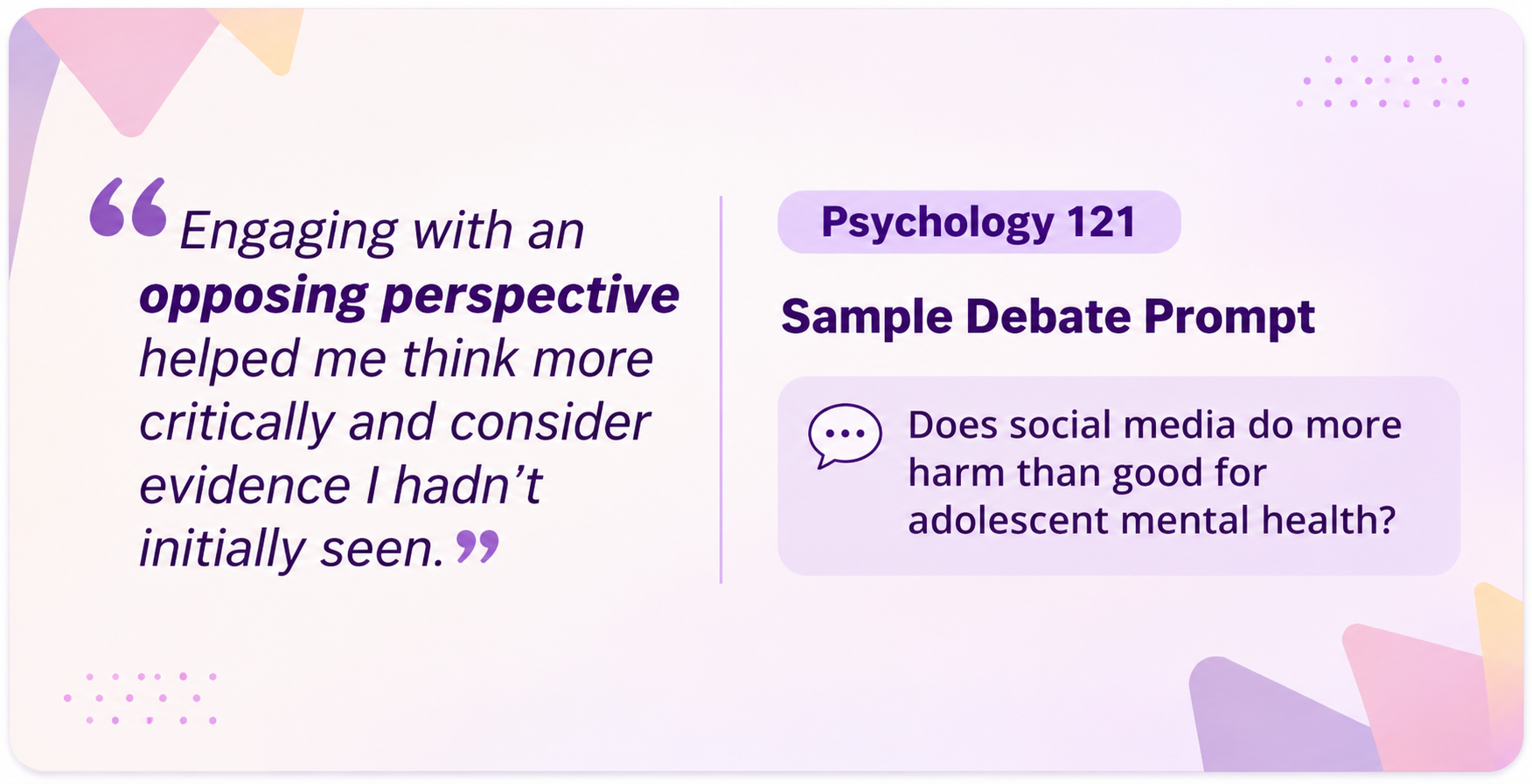
In a Psychology 121 course focused on drug addiction, Thompson has used Kritik to help support debates about whether substances such as hallucinogens should be legalized. Students are assigned positions to defend, including perspectives they may initially oppose.
She describes students protesting their assigned sides, only to return with more nuanced views after working through the arguments. For Thompson, these exercises illustrate how cognitive dissonance, open-ended questions, and exposure to competing explanations can encourage deeper thinking.
They also demonstrate why assessment needs space for more than one defensible answer. Students learn to justify a position rather than merely select one from a list.
The Next Step: AI Transparency Rather Than AI Policing
Generative AI brought a different challenge. To limit unauthorized outside assistance, Thompson had added increasingly detailed restrictions to her assignments and spent time meeting with students over questions about the origins of their work. She also expressed concern about the uncertainty of conventional AI detection methods.
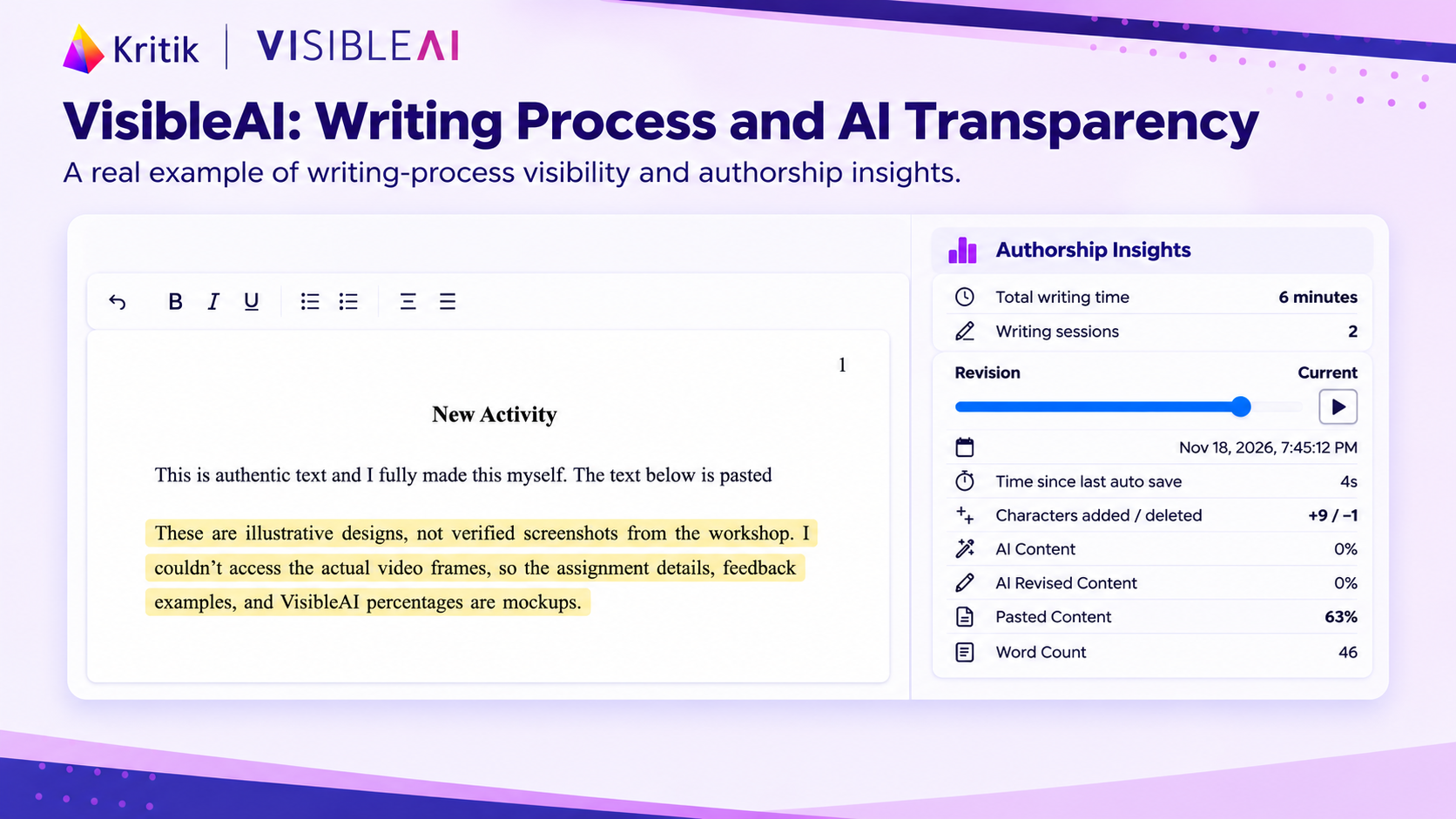
When she learned about VisibleAI, she saw a way to bring the writing process—and permitted AI use—into the assignment itself. VisibleAI can provide visibility into how work develops and how AI assistance is used, while instructors establish assignment expectations. At the time of the workshop, Thompson was preparing to introduce the tool alongside Kritik360; the recording does not document completed classroom outcomes from that combined implementation.
Her goal is more ambitious than identifying rule violations. Thompson describes using AI herself to explore ideas, follow sources, and check information from different angles. But she also believes that critical thinking depends on knowledge students have developed for themselves.
“You need to become an expert at something. You need to have that expertise and now AI really helpsyou out.”
What Large-Class Teaching Can Still Make Possible
Thompson’s experience shows that scale need not mean abandoning written reasoning or individual reflection. A thoughtfully designed peer-assessment cycle can give hundreds of students opportunities to create, evaluate, receive feedback, and encounter viewpoints beyond their own.
And as she explores AI transparency, her guiding question remains consistent: how can instructors create conditions in which students do more than find an answer—where they actually develop the judgment to understand, question, and explain it?
Watch the ImpactEd Week workshop, “Developing Future-Ready Thinkers in the Age of Instant Answers”: https://www.youtube.com/watch?v=zl1ck_f56Jo
Explore how Kritik360 and VisibleAI can support peer assessment and responsible AI use in your courses.